Trying to make sense of Santa Monica home prices, bidding behavior, and timing? You are not alone. This coastal market moves differently than the rest of Los Angeles, and the details matter. In this guide, you will learn how to read the key metrics, why inventory stays tight, what drives premiums, and how to plan your offer or listing with confidence. Let’s dive in.
Market snapshot: what to watch now
You do not need to track every stat to understand the market. Focus on a small set of headline metrics and compare them across property types and zip codes.
Key metrics to track
- Median sale price (SFH vs condo): Shows overall value by property type. Check current month and year-over-year change so you see direction, not just a single data point.
- Median price per square foot: Useful for apples-to-apples comparisons, especially across neighborhoods. Pair $/sqft with typical home size because smaller coastal homes and luxury condos often have higher $/sqft.
- Active inventory and Months of Inventory (MOI): Low MOI favors sellers, higher MOI favors buyers. This is your clearest snapshot of leverage.
- Median days on market (DOM): Tells you how quickly homes go under contract. Combine with MOI to understand urgency.
- Sale-to-list price ratio: If homes are closing at or above list, you are likely in a more competitive pocket.
- Closed and pending sales: Pending sales show current momentum. Closed sales confirm actual pricing.
- Financing mix (cash vs loan, jumbo loans): More cash reduces appraisal and financing risk. Many Santa Monica deals involve jumbo financing.
Compare Santa Monica city metrics to Los Angeles County and the broader LA–Long Beach–Glendale metro to frame coastal pricing and velocity. Santa Monica is smaller with fewer monthly sales, so a rolling 3- or 12-month view makes trends clearer.
Where to confirm the latest numbers
- Use your agent’s MLS feed via CRMLS for the most current sold and active data. Access CRMLS.
- For county-level context, review the California Association of REALTORS® market data. See CAR market data.
Always note the period of any data you reference. Small sample sizes and seasonal swings can make single-month numbers noisy.
Why inventory stays tight
Santa Monica has built-in constraints that keep supply low and create uneven competition from block to block.
Built-in constraints
- Geography and built-out density: With the Pacific Ocean to the west and established neighborhoods to the east, there is limited new land for development.
- Zoning and height limits: Much of the city is low-density, and height limits cap vertical expansion in many areas.
- Coastal permitting: Portions of the city fall within the coastal zone. Projects may require additional approvals through the Local Coastal Program, which can affect timelines. Learn more on the city’s planning site and the state LCP page. City of Santa Monica Planning and California Coastal Commission LCP.
- Historic resources and design review: Some areas have added review layers that limit tear-downs or major changes.
- Rent control and tenant protections: Regulations can make repositioning and conversions more complex, which reduces turnover.
Demand that keeps pressure on prices
- Lifestyle and walkability near the beach, downtown, and transit keep demand strong.
- Proximity to job centers in Santa Monica and Silicon Beach attracts well-qualified buyers.
- Second-home and seasonal buyers add competition, especially in warmer months.
What this means for you: expect fewer listings, quick interest on well-priced homes, and stronger offers with cleaner terms when inventory tightens.
Prices and value drivers
To judge value in Santa Monica, drill down by property type, neighborhood, and proximity to the ocean.
Santa Monica segments explained
- By property type: Single-family homes, condominiums, townhomes, and 2–4 unit properties trade on different $/sqft and timeline dynamics.
- By zip code: 90401 to 90405 cover distinct pockets like Downtown, North of Wilshire, Ocean Park, and more. Each has its own cadence and price profile.
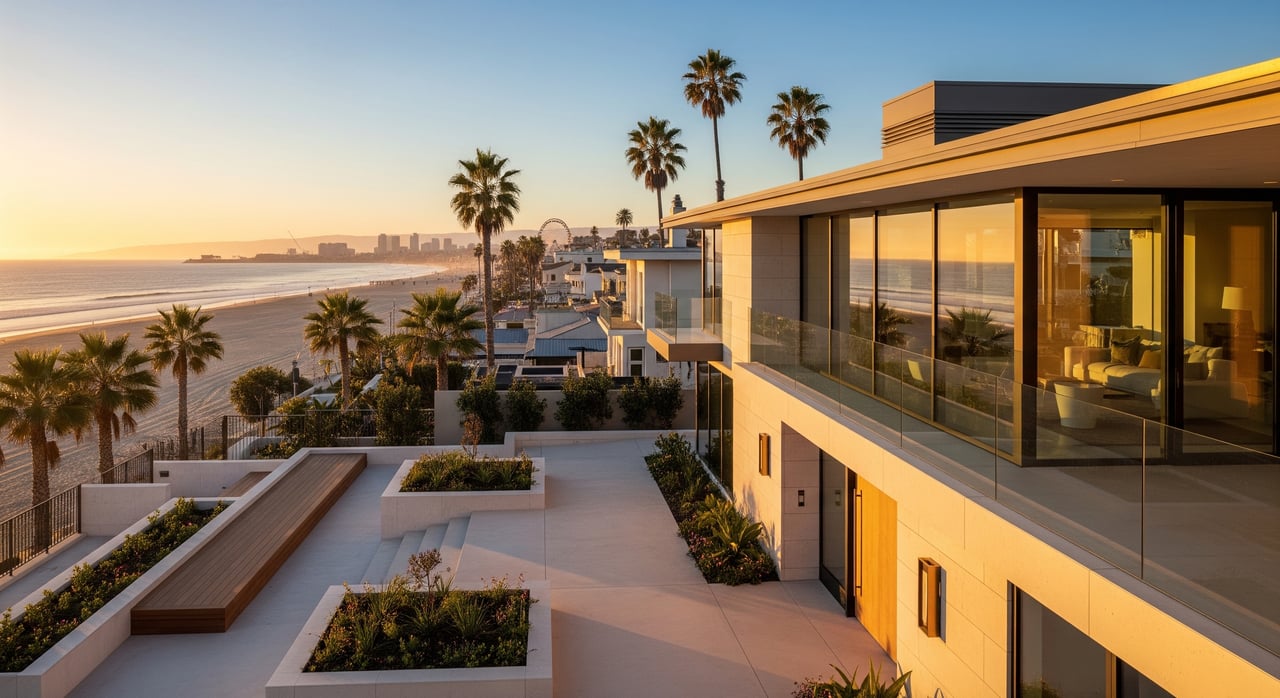
- By ocean proximity: One-block-to-ocean and ocean-view homes carry a consistent premium relative to inland locations.
- By size and lot: Larger homes and larger lots often produce lower $/sqft even if the total price is higher.
Pro tip: Use sold prices for historical performance, and use list prices only to understand current supply and asking trends.
Premiums that move the needle
- Coastal proximity and views: Oceanfront or close-to-beach properties command a clear premium.
- Walkability and transit: Homes near Third Street Promenade, Downtown, or E Line stations often earn higher $/sqft.
- Condition and renovation: Turnkey properties with updated systems typically sell at a premium. Coastal conditions can add costs for windows, HVAC, and materials designed for salt air.
- Parking and garages: Limited parking near commercial corridors and beaches can affect value.
- Condo HOA fees and amenities: Factor monthly HOA into affordability, not just purchase price.
Seasonality, timelines, and negotiation
When to list or shop
- Spring peak: March through June usually brings the most new listings and buyers, which can support stronger pricing and faster sales.
- Summer: Activity often remains steady as lifestyle and second-home buyers tour.
- Late fall and winter: Fewer new listings, which can reduce competition but also limit choices.
Well-priced, move-in-ready homes can sell fast any time of year due to ongoing scarcity.
How offers and contingencies tend to work
- Inspection: Most buyers keep inspection contingencies, but some shorten timelines or limit requests to major items in competitive pockets.
- Financing: Jumbo loans are common and may require more documentation and reserves. Strong pre-approval and appraisal gap language can help.
- Escalation clauses: Common when inventory is tight. Sellers often prefer clean terms plus strong escalation.
- Closing timelines: Cash can close faster. Jumbo-financed deals may need a bit more time for underwriting.
Coastal due diligence and insurance
Santa Monica transactions involve a few extra checks, especially near the water.
Disclosures and risk checks
- Natural hazards: Review Natural Hazards Disclosure, flood, and geologic risk information. Use official flood resources to assess insurance needs. FEMA Flood Map Service Center and California Department of Water Resources Flood Management.
- Geotechnical and seawall assessments: For ocean-adjacent homes, consider additional reports beyond the standard home inspection.
- Insurance planning: Earthquake insurance is separate in California, and flood coverage depends on zoning. Get quotes early, since premiums and underwriting can impact affordability.
- Property records: Confirm lot size, improvements, and assessments. Los Angeles County Assessor can help you verify basics.
Quick checklists
Buyer checklist
- Get fully underwritten pre-approval, including jumbo if needed.
- Price your monthly budget with HOA, taxes, insurance, and maintenance.
- Line up insurance quotes early for coastal and earthquake coverage.
- Plan inspections: general, pest, roof, HVAC. Add geotechnical or seawall checks for ocean-adjacent properties.
- Be ready to tour quickly and write clean terms. Use escalation clauses only with your agent’s guidance.
- Compare $/sqft with typical size and condition for the area you want.
Seller checklist
- Time your listing for spring if possible, or price strategically in off-peak seasons.
- Stage to highlight indoor-outdoor living, light, and storage. Address deferred maintenance that buyers will flag.
- Set pricing using recent solds and a rolling 3- or 12-month read to avoid one-off comps.
- Prepare disclosures early, including coastal and natural hazards where applicable.
- Expect faster closings for cash. Build in time for jumbo financing if your buyer needs it.
Work with a local advisor
Santa Monica rewards preparation, precision, and presentation. You deserve a partner who reads the numbers accurately, understands micro-neighborhood premiums, and markets your home with polish. If you are ready to tour or list, connect with Laila Merchant for a data-driven plan and a full-service experience tailored to your goals.
FAQs
How are Santa Monica prices different than the rest of LA?
- Santa Monica has tighter supply, strong lifestyle demand, and a clear coastal premium, so pricing and $/sqft often sit above broader Los Angeles County averages.
How much more do ocean-view or near-beach homes sell for?
- There is a consistent premium for ocean-proximate properties. Compare recent sold $/sqft within one block of the beach to homes more than 0.5 miles inland to quantify it.
When is the best time to list or buy in Santa Monica?
- Spring usually offers the most new listings and buyers. Late fall and winter can bring less competition, but you will have fewer choices.
Do I need a jumbo loan to buy in Santa Monica?
- Many transactions use jumbo financing due to higher prices. Confirm current loan limits and underwriting requirements with your lender early.
How fast do homes sell in Santa Monica?
- It varies by pocket and price band. Well-priced homes in desirable locations can go pending within days; use current DOM and MOI for the clearest picture.
What inspections are smart for coastal homes and condos?
- Standard home and pest inspections plus roof and HVAC checks. For ocean-adjacent homes, consider geotechnical reviews and seawall or coastal protection assessments.
How do HOA fees affect condo affordability near the beach?
- Factor HOA into your monthly cost alongside principal, interest, taxes, and insurance. Higher HOAs can offset a lower purchase price.
How should I compare neighborhoods or zip codes in Santa Monica?
- Review 90401–90405 separately by property type, $/sqft, DOM, and MOI, and pair results with typical home size and ocean proximity for a fair comparison.